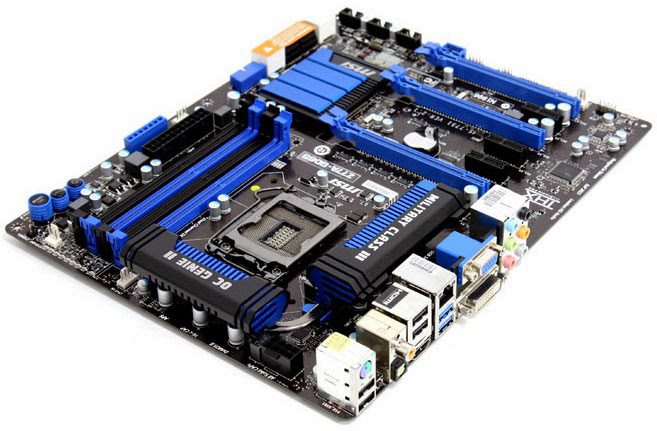
Motherboard repair is worth attempting when the fault is isolated — a blown capacitor, failed BIOS chip, or damaged power connector — and the board is less than four or five years old. When corrosion is widespread, traces are burnt, or repair labor would exceed the cost of a like-for-like replacement board, replacement wins. In our experience servicing Albany-area businesses since 2008, roughly 60% of desktop motherboard failures we diagnose are repairable at lower cost than replacement; for laptops that number drops closer to 40% because proprietary boards are harder to source.
Don’t want to repair it yourself?
We repair motherboards every day for customers across Albany, Schenectady, Troy, and Clifton Park NY. Capacitor replacement, BIOS recovery, board-level diagnostics — and a like-for-like replacement quote if it’s beyond repair. Free diagnostic, written quote before any work begins.
Step 1 — Rule Out the Simple Stuff First (Connectivity Check)
Before you assume the motherboard itself is dead, spend five minutes on the basics. According to iFixit’s repair database, a significant share of “dead PC” reports trace back to a loose 24-pin ATX power connector or an unseated RAM stick — not a failed board. We see this constantly with small businesses in the Capital Region whose staff move tower systems under desks without powering down properly first.
A desktop motherboard will attempt to POST with just four components connected:
- One stick of RAM seated in the correct slot (check your manual — it is almost always the slot farthest from the CPU)
- A working power supply with both the 24-pin and the 4/8-pin CPU power connectors fully clicked in
- A CPU with its cooler attached (the board will shut down in seconds without a cooler)
- The motherboard itself
Disconnect every non-essential device — additional hard drives, discrete GPU, USB peripherals — and attempt a bare-minimum boot. If the system POSTs (even to a BIOS screen), work your way back by adding one component at a time. If it still will not POST with only those four components, the motherboard, CPU, RAM, or PSU is the culprit. A cheap PSU tester (under $15 at any electronics retailer) can eliminate the power supply in under a minute.
Step 2 — Inspect for Physical Damage
Unplug the machine from the wall — not just shut it down, fully unplugged — before opening the case. On a desktop, remove the side panel. On a laptop, remove the bottom cover and, where necessary, the keyboard deck to expose the board. Use a flashlight or a phone torch and look methodically from one edge of the board to the other.
What you are looking for — and what it means
| Sign of damage | Likely cause | Repairability |
|---|---|---|
| Bulging or leaking capacitors (tops look domed or brown crust visible at base) | Age, heat, poor-quality caps (common on budget boards 2005–2012) | High — capacitor replacement is the most cost-effective motherboard repair, typically $60–$120 labor for a desktop |
| Burnt or blackened area, charred smell | Power surge, shorted component, VRM failure | Low to moderate — depends on which traces are damaged; board replacement is often cheaper above $150 repair estimate |
| Corrosion (white or green residue) across multiple areas | Liquid intrusion | Low — if corrosion has reached the BGA solder joints under the CPU or GPU, professional rework equipment is required and cost can exceed board value |
| Bent or broken SATA/USB port | Mechanical stress — cable yanked at an angle | Moderate — port replacement is soldering work but straightforward for an experienced tech |
| Single cracked trace visible near a port | Drop or flex damage (common in laptops) | Moderate — trace repair with conductive pen or jumper wire works if the break is accessible |
The rule of thumb our technicians use: if physical damage is confined to one zone of the board and does not involve BGA-mounted chips, repair is worth quoting. If two or more independent damage sites exist, replacement usually wins on cost.
If you spot liquid damage, do not plug the machine in under any circumstances. Corrosion continues while power is applied and will destroy additional components. Bring it to a computer repair shop dry and unpowered.
Step 3 — Interpret the Diagnostic Beep Codes
When a motherboard detects a hardware fault during POST it cannot display on screen (because the GPU or RAM may itself be the problem), it communicates through a speaker beep pattern. Most boards use one of three BIOS firmware vendors. Here are the most common codes our techs reference:
AMI BIOS (very common on current consumer and business boards)
- 1 short beep — POST passed; normal boot
- 2 short beeps — Memory parity error; reseat or replace RAM
- 3 short beeps — Base 64K memory failure; bad RAM stick
- 5 short beeps — CPU failure; processor or socket problem
- 8 short beeps — Display memory read/write failure; GPU or integrated graphics fault
- Continuous long beeps — RAM not detected; reseat sticks first
Phoenix BIOS (common on older business-class machines, many Lenovo ThinkPads)
- 1-3-1-1 — Test DRAM refresh; memory controller issue on the motherboard
- 1-3-1-3 — Test 8742 keyboard controller; board-level fault
- 1-3-4-1 — RAM failure on address line; bad RAM or memory slot
- 3-3-4 — Video memory test failure; GPU problem
Award BIOS (older desktops, still common in some refurbished stock)
- 1 long, 2 short — Video card or monitor problem
- Repeating short beeps — Power supply issue, not the board itself
- 1 long, 3 short — No video card detected
In our work with Albany-area clients, the single most common beep-code call we receive is AMI continuous long beeps after a RAM stick has worked loose during a machine move. Reseating the RAM resolves it in under two minutes. If the beep pattern points to the CPU or memory controller, that is a board-level fault and requires bench diagnostics.
Step 4 — Screen Artifacts and Corrupted Display Output
Random characters, color blocks, or a corrupted POST screen on startup point to either the dedicated GPU or the integrated graphics controller on the motherboard. Before assuming the board is fried, test with a known-good GPU in a different PCIe slot. If the artifacts persist across multiple GPUs, the integrated graphics or the PCIe controller on the motherboard is at fault — and that is generally not field-repairable without BGA rework equipment.
Liquid damage frequently presents this way. If a client tells us a drink was spilled on or near the machine, we treat the entire board as potentially compromised until a full bench inspection proves otherwise.
Repair vs. Replace — The Cost Framework
This is the question every business owner should ask before authorizing work. Here is how we frame it for our Albany laptop repair and desktop clients:
- Capacitor replacement (desktop): $60–$120 parts and labor. Almost always worth it on a board under six years old.
- BIOS chip replacement or reflash: $75–$150. Worth it if the rest of the board is sound and the machine has data or software that is painful to migrate.
- Damaged port repair (SATA, USB, power jack): $50–$100. Usually straightforward; almost always worth it.
- BGA rework (GPU or CPU re-solder): $150–$300+. Only worthwhile on high-value boards (workstations, Mac logic boards) or where data recovery is the priority.
- Full board replacement: $100–$400+ for the part depending on the platform, plus labor. For a machine over five years old, compare this total against a refurbished replacement PC before committing.
Our honest rule: if repair cost exceeds 50% of the machine’s current replacement value, we recommend replacement and say so in writing before any work starts.
For businesses relying on specific software tied to hardware licenses, or for machines with irreplaceable local data, repair can still make sense above that threshold — but clients deserve to make that call with full information. That is why our data recovery in Albany assessment always runs alongside any motherboard diagnostic for business machines.
When DIY Makes Sense — and When It Does Not
Reseating RAM and checking cable connections: any careful user can do this safely. Clearing CMOS (removing the coin-cell battery for 30 seconds with the machine unplugged) to reset BIOS settings: also accessible to a non-technician.
Soldering capacitors, reflashing BIOS chips, or repairing broken traces requires steady hands, proper equipment (a temperature-controlled iron, flux, desoldering wick), and the ability to read component markings. If you have not soldered surface-mount components before, a motherboard is not the place to start — a mistake can destroy an otherwise salvageable board. For Albany and Capital Region businesses, the cost of professional computer repair is almost always less than the cost of a mishandled DIY attempt on a production machine.
Frequently Asked Questions
How long does motherboard repair take?
A standard diagnostic takes 30–60 minutes. Capacitor replacement on a desktop is typically completed same-day or next business day. BIOS recovery and port repairs are usually 24–48 hours. BGA rework or sourcing a rare replacement board can take 3–5 business days.
Can a motherboard be repaired after a power surge?
Sometimes. A surge that blew only the onboard fuses or a VRM component may be repairable. A surge that carbonized multiple areas of the board is almost always a replacement situation. A proper surge suppressor and UPS costs far less than board replacement — something we remind every new client during onboarding.
Is motherboard repair covered under warranty?
Manufacturer warranties typically cover defects but exclude physical damage and liquid intrusion. Business-grade machines (ThinkPad, EliteBook, Precision series) often include accidental damage protection as an add-on — worth checking before paying out of pocket.
Get a Free Motherboard Diagnostic in Albany
Will Power PCs has provided motherboard repair and computer repair services to businesses across Albany, Schenectady, Troy, Clifton Park, and Saratoga Springs since 2008 — with over 200 five-star Google reviews from Capital Region clients. Every repair starts with a free hardware diagnostic and a written quote before any work begins. No vague estimates, no surprise charges.
If your machine is down and your business depends on it, call us at 518-764-7000 or submit a service request online. Our standard response SLA is 30 minutes, and we offer remote IT support for issues that do not require a bench repair. We will tell you honestly whether repair or replacement is the smarter investment — and back that recommendation in writing.


Leave a Reply
You must be logged in to post a comment.